New and Good…

A few months ago, my building principal asked me to be the keynote speaker at SUMMIT23 for PA Educational Leaders. I was honored, and terrified. What in the world would a high school teacher and, let’s face it, one-time author have to say to a banquet room of hundreds of administrators? After some glasses of wine and a lot of deleting, here’s what I came up with.

August 6, 2023

The Alloy Hotel

King of Prussia, PA

            Thank you so much. You know, when I told my 12th grade counter-part and work-wife, Rachel, that I was asked to speak at this conference, she said, “Uh huh. Right, right. So, hundreds of administrators, correct?” I said, “mmm hmm, yeah.” And she said, “So basically every teacher’s worst nightmare. You said yes to every teacher’s worst nightmare…

But what an honor, right?”

Don’t worry about me though… I’m going to work out a sweet little deal with Jonathan Bauer for this to cover all of my evaluations for the remainder of my career. I’m sure he’ll jump right on board.

I thought to start, I’d go back in time and read the very first piece I ever had published. That 2015 publication came along much later in life than my undergrad-self expected… about two decades later, to be exact—when my only child was in the midst of college, when I had said goodbye to a particularly endearing, particularly brilliant graduating class, when I had gone back to school, again, for the MFA…  when I thought that maybe, just maybe, I had peaked in my career.

This is eight years ago. It’s called “The Meantime.”

Over two-thousand students have walked across my classroom threshold. I have counseled and consoled as they’ve stressed over research papers and graduation projects, evaluated poignant and disastrous essays, and conferenced with them regarding the beauty of a clear, eloquent sentence. But none of this was supposed to happen. Those students were not on my trajectory. They weren’t a part of my plan.

I was supposed to be a college professor and publish great poetry that scholars and academics would clamor to read. I was supposed to travel to writing conferences, rub elbows with Mary Ruefle, Phillip Levine, and Rita Dove, and wear clothes hand-woven by hippies in island communes. This was the plan.

But it didn’t happen.

Right before a psychology exam my sophomore year of college, I stared at a pregnancy test as a little blank window turned to the most dreadful, the most perfect little plus sign I had ever seen. The irony of my situation didn’t go unnoticed. There I was, studying the greatest thinkers of the women’s movement, supporting and promoting women’s reproductive rights, examining the confines of the patriarchy—and choosing to keep my baby. I was in love, after all. Very, very in love. I was also an idealist. What’s the big deal? We’ll stagger our classes. We can still make it.

We had our baby. I traded my courses in Medieval Women’s Literature, Shakespeare, and the Modernists for childbirth, breastfeeding, and parenting classes. We married a few months later and played house. He graduated on time and made it; I settled. I needed to find something to stay afloat and succeed. I needed something in the meantime.

After attaining my Bachelors in English Literature, I took a job at Upper Merion Area High School as a writing instructor, but I wasn’t yet certified to be a classroom teacher. Students composed thematic essays in their English classes, and then we conferenced on a range of skills from avoiding the hated run-on sentence to finessing the art of voice and tone. Much to my surprise, and contrary to even my own high school memories, teenagers were fun, and odd, and needy—a pubescent mishmash of potential, bright-eyed and acne-scarred. I was compelled. I’ll teach high school in the meantime. Just long enough to save some money for my graduate degrees.  

            Seeking some sort of regimen to balance my ad-hoc high school career and toddler play dates, I made my way to Cabrini College and enrolled in secondary certification classes. I immersed myself in the coursework. If, in the meantime, I was going to be a public school teacher, I might as well be an awesome one. I could do it all—investigate classroom management and evaluation practices and cuddle up at night reading Goodnight Moon; observe master teachers in the most struggling and difficult classrooms and play the supportive company wife to my husband and his growing team of colleagues; student teach, with surprising ease and success, and make it home in time for sidewalk chalk and backyard bubbles; dictate lesson plan notes into (get this) a handheld recorder while squeezing myself into a slinky evening gown for a stakeholder’s dinner. I was unstoppable.

For all of my success, the stigma didn’t disappear. The other moms, fifteen years my elder, interrogated, the company wives looked down their noses, my own teaching co-workers whispered. But she looks too young to be a mom. It was fine. Hurt feelings couldn’t exist in the limbo of the meantime. I had a job to do, there was money to make, there were goals to accomplish.

             My meantime, somehow, turned into seventeen years. In that time, I received a contract position at Upper Merion, and they paid for my Masters in English. Life goals… check. But instead of sending out résumés and applications for college positions, I delved deeper into high school life. I even eventually, and at first reluctantly, became Department Chair. I attended my students’ activities, made a fool of myself at Faculty Follies, created collages of each graduating senior class, perfected the fine art of the college essay, celebrated each college acceptance, and dried tears when the rejections rolled in. I also used the literature to instill meaning in their strange, transitory existence—to remind them, as Walt Whitman does so eloquently, that they will, most definitely, contribute a verse.

But none of this was supposed to happen, and I’d be lying if I said it doesn’t get in the way. Each time I think I’ve had enough with the machine, when I just cannot fathom a new regulation, a new initiative, a new unqualified legislator seeking to undermine my own professional autonomy, someone is always there, at the completely right second, to pull me back—to remind me why I’m here.

I never aspired to the Hollywood-cliché classroom, but sometimes in twelfth grade English, where we discuss the meaning of life, the dramatic naturally occurs. Students’ lives are murky, and I adore that. All of their strengths and all of their flaws meld into this wondrous grey of reality. The student, who appeared to be a lost cause, manages to graduate; I win over the passive-aggressive asshole who, by all accounts, ends up not being an asshole; a mother, plagued with cancer, hugs me at graduation and asks me to look after her son when she dies; the pregnant girl, who needed someone to hold her hand in the doctor’s waiting room, ends up with PhD; a former student calls one night to say that she became a teacher and we discuss art, life, poetry, and death until the sun rises; a class collectively tears up over the beauty of “Do Not Go Gentle Into That Good Night” and composes a group poem for me; a student lingers after class to tell me he once hated poetry, and now writes sonnets in his free time; a boy loses his dog, stays after class to ponder life’s mysteries, and becomes a second son. And then there are those I have lost—those whose lives were cut short. Their ghosts remind me how I love them all like my own. How I fear for them when they leave my classroom. How I didn’t have any more children because of them.

Today, the memories are a blur. It’s almost as if there’s a suspension of time, in the meantime. Maybe I’m still that young girl trying to figure out years of faces, moments, days, classes. They all start to merge. Some days I can’t believe I’ve taught thousands of them. I snap hundreds of pictures to remind myself that they’re real—that they were actually in my grasp for a short time.

*Pause*

I’m going to stop right there for a moment… I’ll save the ending.

The Meantime, right? Some of you were in the meantime as teachers in your own classrooms. Some of you are there as you strive for that head principal position in your district, running your own building… some of you as you climb your way to superintendent where you can tackle our work on a much larger scale. After a quarter of a century, I get it.

For years before the publication of “The Meantime,” I had taught either the full text or a portion of Robert Pirsig’s Zen and the Art of Motorcycle Maintenance, and there is one particular line that I bring up throughout the entirety of my students’ senior year, and it goes like this… “It’s the sides of the mountain which sustain life, not the top.”  The sides of the mountain. Do I have any hikers here? Good to know.

You see it wasn’t just “The Meantime” getting published, it wasn’t just teaching Pirsig all those years that did it. I was still at the sides—which is lovely with flowers, creeks, the occasional snake, but you know, we’re well equipped. I started getting published for real. And those pieces gained some attention. I started a book.

I knew if I wanted to test this for real, if wanted to finish that terminal degree, if I wanted to finish that book, I needed some, well…  time. I needed to step away from the longest lasting home I ever knew, step away from five very sweet, very supportive classes of children, and to throw myself into the hike. So I saved up and took one semester and one summer and I did it all—all over this country and all over Europe I conquered fears. I travelled alone, met new people, drank many lovely varieties of red wine, and wrote and wrote and wrote, only to wake up in the morning and edit, edit, edit. I watched countless sunrises and as many sunsets, filling my lungs with delicious fresh air and my belly with new, fresh foods.

I climbed to the tops of mountains.

Interestingly enough, during one of my pit-stops back home, I stopped by Jonathan’s office to touch base. (This happened quite often, to be honest. This fear of missing out that, of course, never happens in the summer months.) I regaled him with all my adventures: the waterfalls I hiked to; the ancient churchyards I roamed; the beautiful people I met—each teaching me something new; the hundreds of poems I’d read as I listened to the crash of ocean waves and the ripples of pristine lakes.

“God, Jen. It sounds amazing. Sounds magical.”

The bell rang and students bustled in the hall outside his office window. I watched them.

“Yeah. Definitely. But no more magical than my dusty, old cinderblock classroom.”

And it’s was true. Probably the most honest, most raw words I’ve ever spoken.

There’s a Hebrew word I love: Shul. Traditionally it means school or temple—a place of learning. It also implies a sacred impression of something that was once “there.” A footprint on a path. The bones of an abandoned house that was once filled with love. A mark that remains.

That mark was never at the top of a mountain. And come to find out, I didn’t peak… that gut feeling I had was a natural evolution. My mind knowing that things would change; I would no longer be the same Ms. Rieger I had always been. And I shouldn’t be. I had to grow out of her and try on my new skin—even if it did look a little more weathered every morning when I stared in the mirror. I knew some questions would still linger—Is this the year they stop relating to me? Is this the year I lose touch? Even on those rough mornings though, I’m keenly aware that this job is important and what we get to do each day is a privilege… and I love that here, in this room, it’s kind of our secret, right? It’s so much more than a cliched meme, an inspirational poster, or even a heart-warming book that some middle-aged teacher wrote. It’s the indefinable Quality that Pirsig searches for. It’s sacred. And it’s on the sides of the mountain.

I’m sure you will spend this conference investigating new best practices and brainstorming new ways to drill down the data. I understand. It’s a big part of the work we do. We want our teachers to be equipped and we want our students to succeed.  

But I’m here to tell you it’s ok to breathe. It’s ok to linger at the sides of the mountain just a bit. It’s ok to take a walk with the meantime. It’s ok to find a little more of life, a little more purpose within that walk. It’s ok to love those kids like they’re your own and love your teachers like they’re family. It’s actually essential. I’m here to tell you that goals are necessary, but when you think about reaching the top, consider these wise words a newly retired colleague once told me…. Sometimes the best thing that could ever happen to you is not getting what you want.

So I think maybe I’ll end with the conclusion of “The Meantime”…

When I learned the content, designed the lessons, wrote my thesis, and attended countless workshops on standardized tests, nobody explained how to handle the sorrow that comes with this beautiful, frightening job—the letdowns, the bureaucracy, the losses, the goodbyes.

But they also didn’t tell me about the joy.

Maybe the meantime has always been my time. Maybe this was the trajectory predestined in the stars, if you believe in that sort of thing. Maybe I won’t be recognized for the hundreds of poems I’ve composed. It’s okay. Maybe my kids are my poem—some stanzas are free verse, some structured, some with short line breaks, and some with enjambment that continues well past graduation day. All contributing to the verse of my life. All making my time here worth it.
Curse Me, Bless Me

Curse Me, Bless Me

Rathalla Review, Spring 2018

We were silent on the ride back.“How many more times do you think we’ll have to do this, Rach? I mean, the hospitals and the funerals? Twenty more times? Thirty?”

“I don’t know. I can’t get Tammy’s face out of my head. She’s everywhere.”

I unfastened my seat belt, grabbed her hand, and kissed it. “That’s because we’re her.”

Becoming Jen

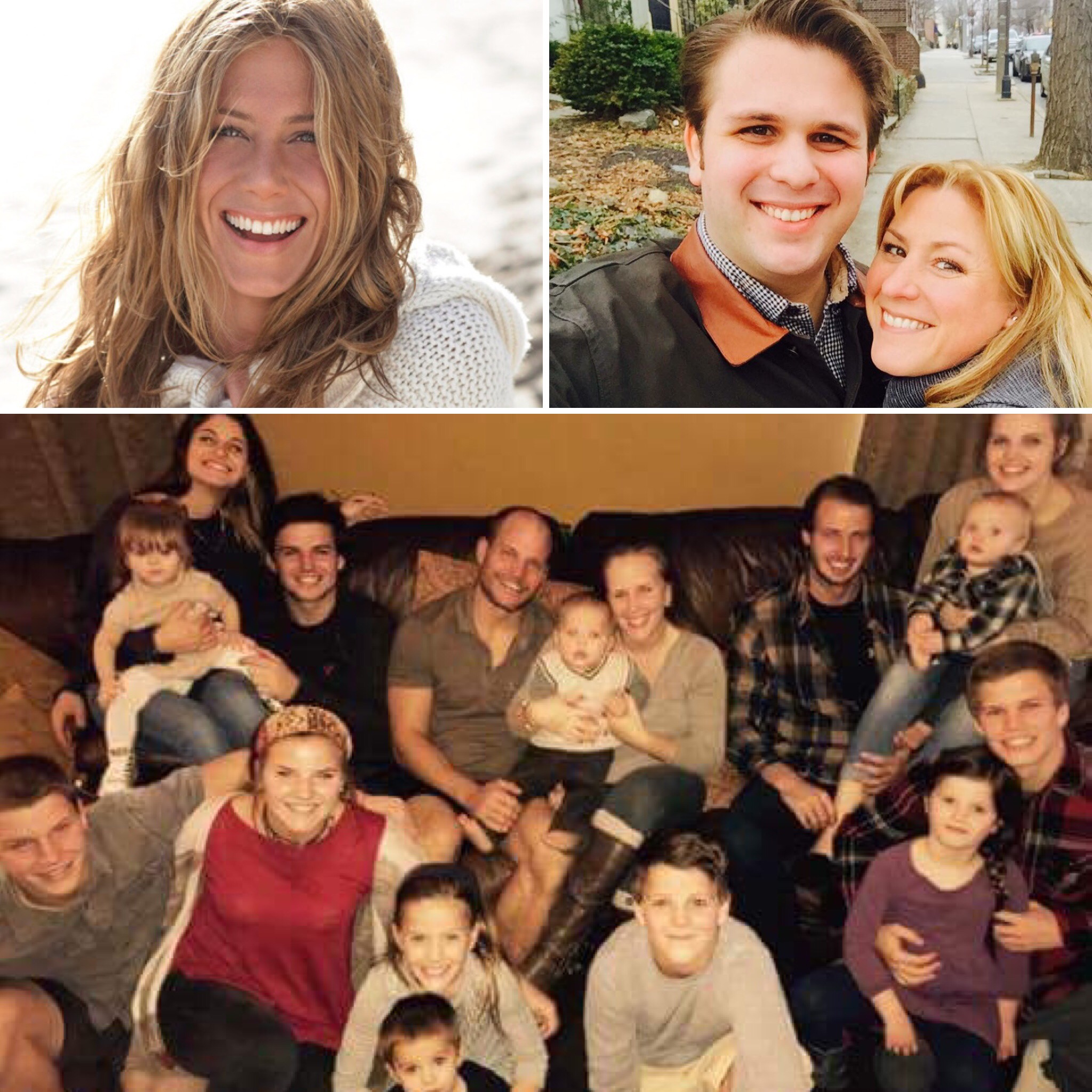
IMG_0119In observance of Mother’s Day, I thought I’d share this as a tribute for the many mothers out there– those who are biologically mothers and those who lovingly contribute to the lives of young people by mentoring, comforting, teaching, nursing… i.e. mothering. Many thanks to BUST Magazine for publishing the initial version of this story in July of 2016. I have since edited and added to it for my collection, Burning Sage. Also thanks to my girlhood friend, Jen, for allowing me to share this little glimpse into her beautiful family. 
 

Becoming Jen

In the fall of 1994, I was a new mom, a new wife, and a faithful fanatic of the brand new sitcom, Friends. I looked forward to Thursday night TV all week. I had just turned 21, and after a full day of changing diapers, watching Barney, and reading Shakespeare, I would glue myself to my grandma’s hand-me-down console TV in our first apartment and pretend I was carefree again. I imagined myself, along with my own friends, living it up in Manhattan, drinking from oversized coffee cups, and popping in and out of each other’s apartments. I imagined being thin again, wearing cute clothes, and sitting next to my husband on the couch in Central Perk as we all contributed to the most trivial and inane conversations. I imagined being Rachel.

Rachel Green was incredibly cute and fairly flawed. She almost let societal expectations undermine her self-worth and forge a path which, for her, meant complacency. But she didn’t. She didn’t go through with a loveless marriage, and she decided instead to make it on her own. She cut up Daddy’s credit cards and went from barista to fashion buyer. With her adorable new haircut that took Gen X-ers by storm, Rachel became somewhat of an icon to young women. This isn’t to say she was a perfect role model. Her spoiled upbringing, episodic bouts of whining, and at times, air-headed nature could set anyone on edge. But she was also kind of real—a young woman questioning privilege, battling her own inflated ego, seeking a way to remain true to herself and true to her friends. Watching her was a fun escape and actually made me contemplate the person I did and did not want to be. Learning about Jennifer Aniston over the years, or Jen as I like to call her, was even more interesting. Her attitude toward aging, beauty, charity, heartbreak, and motherhood left me in awe. It became clear that it wasn’t Rachel I admired; it was Jen.

Jennifer Aniston wrote an article for The Huffington Post voicing her frustration over incessant pregnancy rumors. She states, “For the record, I am not pregnant. What I am is fed up.” Jen is 47. You would think there would be a point when people stop prodding her, when they start minding their own business. I know too well they won’t. I imagine when Jen is 65 and I am 61, when our eggs have long since dried up, our friends, families, and co-workers (a.k.a. Mr. and Mrs. Well-Meaning) will ask, “So, when are you having a baby?” Her experience is different than mine, obviously. First of all, she’s a celebrity and is under the microscope every day; additionally, she has never had a baby. On the other hand, I’ve had one child and, on many occasions, have been made to feel like a neglectful parent because of my son’s only-child-existence. What unites us is that we are both apparently unnatural. Both freaks in a world that loves labels, and traditions, and categories.

Once upon a time, there was another Jen. I went to middle school and high school with Jen Wylie—my goofy, lovely choir friend. Jen and I didn’t often socialize outside of school. She did have one crazy party sophomore year that our classmates still talk about to this day. It looked like a scene right out of Sixteen Candles. Beer covered her parents’ floors, tables ended up broken, beds were, good God, besmirched. So when she got pregnant shortly after graduating from high school, we were all quite surprised; it was still assumed she was grounded for the rest of her natural life.

Her baby girl was beautiful—the perfect combination of Jen’s sweet face and the face of her husband, Roman, the older football god we all had a crush on growing up. She seemed happy. It was all working out. And she conveyed this to me with a phone call after hearing that I was pregnant. Baby gurgles in the background, I sat on my kitchen floor, tracing the patterns in the tiles with my fingers, listening to Jen explain everything I was about to encounter and asking me questions I had only recently pondered. Was I taking prenatal vitamins? Did I see the doctor yet? Did I hear the heartbeat? Some questions took me to the world of adulthood that I still couldn’t face. Would I need WIC or medical assistance? Bottle or breastfeed? Natural childbirth or epidural anesthesia? My mind was in a whirl. Wasn’t it just yesterday that I listened to New Kids on the Block with this girl? Wasn’t it just yesterday that I borrowed her lip gloss in choir?

Shortly after I had my baby, Jen had another. And then another. And then seven more. And then two grandbabies before the age of 43. She exudes a magical, maternal force that is, quite honestly, enviable. Her Facebook posts scream of her art—nurturing her gorgeous family. It is her gift.

Mr. and Mrs. Well-Meaning have stalked Jen’s life too, only with different questions: How do you feed them? Are they all from the same marriage? How much does your husband make? Because, you see, this other Jen is a freak too. Just like me. Just like Jennifer Aniston.

But here is what Mr. and Mrs. Well-Meaning, with all of their questions and concerns, don’t know: They don’t know our lives. They don’t know which Jen lies awake at night scared about decisions of the past, scared about screwing up the present—scared about regret in the future. They don’t know which Jen prays to one day cradle her first tiny person, or yet another tiny person, of her very own. They don’t know which Jen lives in certainty, confident and proud of her life choices. They don’t know which Jen is infertile, and is in turn, stung by feelings of inadequacy and hopelessness every time there’s a comment. They don’t know which Jen’s ovaries burn every time she holds a baby or if each day crossed off the calendar is another reminder of a window that inches closed, just a little bit more. They don’t know which Jen has suffered painful loss, and therefore, holds a much different appreciation of new life. The “concerned men” don’t know what carrying a baby for nine months does to a person. How a little piece of your heart is taken from you, leaving you a helpless bystander to a part beautiful, part cruel world that you hope will be kind and fair, but you know is certain to incite pain. They don’t know which Jen swallows down the pangs of envy whenever her friends send beautiful holiday cards of fresh, toothless smiles. They don’t know which Jen rejoices each day, or which Jen cries each night. And, most of all, Mr. and Mrs. Well-Meaning, with all their vague, but let’s face it, snarky and intrusive intentions, obviously don’t know how to shut their mouths.

The funny thing about this life is, it’s supposed to be our own. We’re supposed to be able to decide what’s best for us, pay our bills, and be kind to people without bowing to societal expectations, whether that includes having ten kids or none. When I see Jennifer Aniston in commercials and new movies, exuding confidence with her Aveeno kissed skin, I feel like a proud little sister. I know it sounds ridiculous; she doesn’t even know I exist. But I like to imagine that when she holds the children at St. Jude Hospital, speaks passionately about her work with orphans in Tijuana, and advocates for LGTB youth, her heart matches my own. Maybe she feels the same way I feel when my only child shares good news with me, when I sense that he’s hurting, when my students come to me with problems, and when they return to me well after they graduate. Maybe she feels like my high school friend Jen when her oldest daughter walks in the door holding her grandbaby or when her youngest cuts his first tooth.

See, I know a little secret that Mr. and Mrs. Well-Meaning fail to recognize: maternal love has nothing to do with what they’ve been told and the expectations of family and friends. It reaches far beyond the baby-bumps, 2.5 kids, and white-picket fences. Their well-meaning questions only serve as a glaring spotlight into their own lives—their own insecurities.

Leaving Home, Finding Purpose

 screen-shot-2017-01-18-at-11-06-19-am

Leaving Home, Finding Purpose

I’ve worked in education for almost 20 years, and while there have been times when I’ve wanted to pull my hair out and scour the want ads, those times are rare. Truth be told, with the exception of bureaucratic meddling, I love it all, and it’s well known. The short version of the story is that I was never supposed to be a teacher. I was supposed to be a writer and a professor, travelling from old decrepit building to old decrepit building discussing poetry, craft, and getting published. But circumstances changed. I had a baby and needed money. I decided to become an English teacher, and the rest, as they say, is history.  That choice brought me to different life—analyzing classical and contemporary writers, begrudgingly preparing students for standardized tests, conferencing over every kind of writing imaginable, and loving the hell out of my kids. And they are my kids. That’s well known too. I guess this is why everyone was shocked that I decided to take a sabbatical, or as it’s called today, a professional compensated leave, at the start of the winter break.

It was a difficult decision. I’m finishing my second Master’s degree—an MFA in Creative Writing. While my first Master’s in Literature wasn’t easy by any means, the process itself was easier. I was young. I could pull an all-nighter writing a 20-page research paper and still get up to teach 125 teenagers, break up fights, and dry the tears of college rejections. But that was years ago, and this older body refuses to let me do that anymore. Plus, creative writing is different. I get in my own way, constantly second-guessing myself—deleting and revising incessantly. It’s a real head trip. With my thesis approaching, a manuscript that will eventually become my first book, I knew something had to give. I had also been awarded a stipend to travel to Sicily for an International Writers’ Retreat. If I tried to do it all, I would either shortchange my kids or shortchange the opportunity I’ve wanted since I was a teenager. Without even knowing my upcoming students, I made my decision.

From the start of the school year, I threw myself into the Class of 2017 and for four months, I made the most of every second with them. I even selfishly rearranged the order of the curriculum to teach them the content I was most passionate about. The semester flew, but in the best of ways. I laughed with them through their Homecoming pep rally skits, guided them through one of our best Challenge Days yet, cheered them on at their games, comforted many hearts after the election, lent an ear when they confided in me about their crushes, and helped them find their voices through writing. I loved those four months. I love those kids. I think about them every blessed day, watching the clock, wondering how they are, wondering if they miss me even half as much as I miss them.

I’m very used to saying goodbye to my seniors. I do it every year, after all, and I’m always a little sentimental. But I wasn’t expecting how it would feel to be the one leaving them. Let’s face it—we’re all replaceable. I knew they would be fine with their new teacher, and I knew my amazing department would look after them. But would I be okay? Would I be able to handle a life without bells to tell me when to eat and when to pee—a life void of my musty, old classroom? It’s a life without my other family. Having moved around all of my life, that building is the only “permanent” home I know. As one of my graduates eloquently pointed out, it’s my constant: the veteran teachers are my parents; the English teachers, my siblings; the other department teachers, my cousins; the students, my kids. We squabble, discipline, guilt, and love each other the best we can. And leaving that, even just for nine months, is unsettling. By the time December 22nd approached, the heart that has been broken so often at graduation, felt a different kind of breaking. I received warm gifts and beautiful notes from my kids with reminders to pursue my dream. That they would be okay. That they were proud of me. How tables turn. They were the ones teaching me.

One of my last goodbyes was Brian, the fifth child of a family I love—a family that has, in many ways, become my own. I’m invited to their holiday dinners, family vacations, and intense games of Skee Ball at Sea Isle arcades. We both looked forward to his senior year for so long, he even moved up to Advanced Placement to have me. “I’m so sorry I’m abandoning you, Brian,” I managed to say underneath the paper snowflakes and twinkle lights of my classroom’s winter wonderland. Our eyes welled. “You’re not,” he whispered. “You have to do this.” And I did. We all knew I did. He gave me a gorgeous watch that his mother and sisters helped him pick out as a Christmas present, a reminder, and as a goodbye. My time teaching that beautiful family was suddenly up. Just like that.

As I stepped out of the taxi in Ortigia in front of the Acropoli Bed and Breakfast, I looked to the stars and breathed in the cold, salt air. I didn’t know what awaited me in the next two weeks. I didn’t know that I would become closer to my friends Maggie and Maria and even find other kindred spirits among the writers there. I didn’t know I would fall in love with the female patron saints who watched over this little village, or that I would spend so much time questioning my own innate skepticism. I had no idea that I would become even closer with the program director I had known for over 12 years or that I would come to envy the faithful that made their way to church to pray each day. I embraced this lovely gift of time and place and all of its intricacies: I battled the water pressure in my cozy room at the inn, battled my heater when it didn’t work, and battled it when it worked too well; I shot down espresso standing at a café counter when I really wanted to curl up in a coffee house chair with a Starbucks’ Venti; I strengthened my thighs, squatting at every disgusting toilet I encountered and quickly realized that I should hoard toilet paper when the opportunity strikes; I learned that the snowstorm we combatted is a 25-year rarity and that a coach bus can descend an icy mountain backwards; I discovered that my broken Spanish is a nice commonality when English doesn’t work, and that the Ortegians love giving free drinks and compliments to blondes; I realized that I have gone my entire life underestimating the magic of the pistachio, and will now forever dream about pistachio pesto sauce over homemade tagliatelle; but most importantly, I learned that we all need to feel small in this world, and that smallness, that vulnerability, teaches us something. We all seek kindness and understanding, we all wish for the sun to break through the coldness of the clouds just a little more often, we all wish for hope in the face of fear, and we all miss the people we love.

I am lucky, incredibly lucky. I’ve been given a great gift—the opportunity to see what my life’s purpose really is in the absence of that very purpose. I know that there are colleagues back at school who roll their eyes and wonder how I could possibly be so sentimental when I get to take a break from the daily grind to travel and write. I was, after all, the one who signed up for this. I pulled the trigger even though I knew how hard it would be to leave my home and how much I would miss my kids. When I ran this idea past my principal, he cocked his eyebrow, as he’s known to do, smiled and said, of course you should do this. But we both know it’s going to be hard on you.

Yes, I’m a writer, a poet, and a dreamer, and this MFA is such a beautiful bonus to the education I’ve been privileged enough to receive. It’s a blessing to end it on the most gorgeous, mystical island in the world. But more importantly, I’m a teacher and a mother, two titles that took a long time for me to embrace. That’s what I do. That’s who I am. I love, I comfort, I hold on, I let go, I laugh a lot, I cry a lot, and I start all over again each year. This experience is a gift, but loving and helping others—that is the blessing of my life. That is purpose. And no amount of traditional education can teach you that.

Aftershock

It’s Saturday after the election. I’ve caught up on sleep, headed back to the gym, and started reading and writing again—a return to some normalcy after the shock waves.

I didn’t think it would hit me this hard, because I actually didn’t even consider it could happen. I spent my day on Tuesday thinking about how I would reach out to my Republican family members—some Trump voters, some Johnson voters, some angry, reluctant Hillary voters—and move on. Get back to life without an ounce of gloating about my candidate winning. Little did I know they’d be the ones reaching out to me.

I’ve been glued to social media. At times it’s been comforting, seeing how others are coping. At times it takes everything in me not to jump through the screen and strangle people. I understand impulsivity when you feel like you’ve been punched in the gut. Hell, I started writing letters to generations of offspring I’ll never even know. But here are some thoughts to consider:

You have a choice in how you make people feel…

You should probably think about the consequences of your words…

And here’s a tough pill to swallow…

Is your own sense of self-righteousness hypocritical?

Ouch.

I am a heartbroken Democrat, but I refuse to let this turn me into something I’m not. I strongly believe in friendship, family, community, and working hard to find common ground. I know—if we choose to live in a completely dichotomous world, then there is no common ground. If that’s your belief, then it is. It’s not what President Obama asked you to do. It’s not what Hillary Clinton asked you to do. Vitriol is the antithesis of the First Lady’s battle cry, “When they go low, we go high!” Remember that? Maybe your anger will fuel you to do more. But first, look around. If you are letting this election destroy your family, check yourself. You need to talk this out with your uncle? Get off of Facebook and get on the damn phone. Did your mom piss you off with her third-party vote? Invite her to dinner. Or, here’s a thought… you can even look in the mirror and ask yourself if this is a bigger issue than just the election. Maybe you need to work on family, in general. Hmm.

I’m still thinking, planning, trying to find the best way to funnel my energy in the most effective way possible, because I am angry. I know it has to be more than just teaching. That’s my job. I love it, I feel inspired every day, but it’s what I get paid to do. Above and beyond my contract, I volunteer my time with Challenge Day, Community of Caring, and the literary magazine. This world I’m in has shown me the plight of those from different walks of life and how much we need each other. But I can do more. I have to do more. I’ve been complacent, and if my vote is my only civic duty, then I am the hypocrite. And so are you.

My battle cry is going to be loud, fierce, and peaceful. I will continue to fight the racists, the xenophobes, the bigots, the misogynists, but I refuse to stoop to their level or the level of the president-elect. I’ve spent my life honoring the written word too much to use that same gift towards more hatred. I think I need to pull myself together and stop writing letters to my imaginary granddaughters. Instead, I’m going to buy myself some gorgeous old-school stationery and start writing some respectful, but stern letters to the white patriarchy. It’s just a start, but it will help me get my thoughts in order. It will fuel the walk that I’ve talked for 20 years. It will set my purpose, the fire in my heart. While I’m at it though, I’ll probably write one to my mom and dad—a nice little thank you for never making this black sheep feel out of place, for always being proud of me, for consoling me after the woman I liked, and the woman they didn’t, lost. We don’t see completely eye to eye on things, but here’s the reality that all three of us know: There will come a day when they are no longer here, when I am left on this planet without them. And I bet I won’t be thinking about this election then.

Elegy

Elegy

If only I could nudge you from this sleep.

There’s a heartbreaking, but beautiful poem by Theodore Roethke that’s been circling in my mind for some time now called “Elegy for Jane.” The sentiments of the speaker, a teacher, could very well match my own. Because it’s an elegy and also begins with the subtitle, “My student, thrown from a horse,” the outcome is clear. Once a sweet little “wren” flitting about, bringing joy and laughter into the lives around her, Jane left this world too soon. By the end, the poem shifts attention away from Jane and onto the speaker where he contemplates why he’s standing at her fresh grave—what right does he have to mourn like this when he is neither a spouse nor a parent? He’s just a teacher. And he’s at a loss identifying these feelings.

The speaker may not understand, but I do. When you’re training for this profession, nobody ever tells you how much you’re going to love them. Or that many will suffer unspeakable tragedies. Or that many will die.

I thought it would get easier, but it doesn’t. I stood at the casket tonight of a man who died of a heroin overdose, but underneath the mortician’s makeup, I saw a shadow of the boy who barreled into class ready to derail every lesson and tried to charm me into, well, anything but British literature; the kid whose leg shook each football game day because he just couldn’t wait to charge the field; the baseball player who screamed the lyrics of “Buttercup” and rallied the whole team, whether there was a win or a loss. My student. Gone.

Looking around the funeral home, there they were. My kids, only now adults. So many approached, wondering if I remembered them. Of course I do. Some apologized for not keeping in touch. It’s okay. Some apologized for treating me like shit all those years ago. That’s okay too. I wanted their faces to comfort me, but they didn’t. I steadied myself so as to not shake their shoulders and beg them to be safe—beg them not to be the next casket I cry over. Their older, wiser eyes looked like they had seen a lot as well. They were different eyes than the ones I dried at another autumn funeral 15 years ago. Another classmate, another drug overdose. She was 16, and my first student death.

It’s a matter of numbers, really. The more saturated my personal student population, the more likely I am to witness tragedy. But I’m 19 years in, and I’m tired. I’m tired of waking up on weekend mornings to see #RIP all over my social media. I’m tired of my kids getting hit by drunk drivers—suffering life-altering brain injuries and paralysis. I’m tired of motorcycle accidents, suicides, gunshots, and drug overdoses. I’m tired of holding the hands of parents I once laughed with at Back to School Night, relaying my condolences, when I know they will never be happy again.

What was once an unexpected tragedy is now a ritual. I hear the news, I sort through the e-mails, texts, and Facebook messages from my graduates, I call my two best friends, also teachers—also shaken to the core because this is their kid too. We meet in the English office the next morning, walk into my room to stare at the collage of that particular graduating class, and make plans. Jason will drive, Rachel and I will wear the funeral outfits we always wear, we’ll get coffee beforehand. We will immerse ourselves in our current students to ameliorate the sting and try to talk about anything else, all the while preparing ourselves. Another funeral home, another tiny card with a prayer or poem on the back, another casket filled with high school memorabilia. Another goodbye.

As Roethke points out, it’s complicated. Teachers are charged with guiding, instructing, and caring for kids at an intensely vulnerable and formative time in their lives. It’s a huge responsibility and one I’ve never taken lightly. But, at the end of each year, as I let them go, I’m forced to remind myself that they’re not really mine. They have their own moms, just like I have my own son. But that doesn’t make any of this easier. Tonight I said goodbye to one of my 2235. A man who left this world far too soon. A child who wasn’t mine, but also was—at least for one year, 48 minutes each day.

Continuing Education

I have a graduate who infuriates me with his social media activity. A former U.S. Marine, he’s known to post pictures of his favorite gun, his achievements at the shooting range, and memes that taunt his liberal friends. His sense of humor, not always funny. I’ll give him this though—his wit is often satirical in nature, and many, to put it kindly, have a very hard time understanding satire. Having said that, his posts are enough to drive me to drink. He’s one of my graduates, after all—one of my kids. I can remember having sincere conversations with him about standing up for what is right, defending those who are innocent and weak, and loving this country. He has seen a lot—he’s been to places ordinary citizens would never dare venture in their worst nightmares and has encountered situations that would make most of us hide from the world for the rest of our lives. He hasn’t had it easy.

Last night, while multitasking poetry submissions, London excursion research, and DNC highlights, I came across a beautiful Facebook post from Luke. These kinds of sentiments are rare, so when they pop up, I always take a minute to see what he has to say. It was about love, and beauty—holding on and letting go. How there are aspects of life that, try as we might, we just can’t put behind us. The subject of the post was ambiguous. I wasn’t certain if he was talking about a girl, a friend, or even his country, but the intention was clear. We all want kindness, compassion, and love in our lives. It is the human condition that connects us. And I cried.

I am the liberal daughter of Republicans. Feminist? Yes. Bra burner? Don’t put it past me. I do despise them, after all. My parents are moderate and support many of the social issues I also embrace; so while we disagree on many things, I think when it comes down to it, we agree upon a lot as well. Growing up, they taught me to think for myself—to be true to my heart and not let anyone sway my beliefs, including them. I’ve devoted my life to standing up for the disenfranchised, the marginalized, the voiceless, and maybe he doesn’t realize it, but my dad is the one who taught me that. He spent his career locking up bad guys—really bad guys. The kind who send bombs, anthrax, and child pornography through the mail—sick bastards who hurt children and prey on the innocent. During the attacks on 9/11, the Postmaster General asked my dad not to retire, as he had planned—to stay on as Chief Postal Inspector of the country and bring enemies to justice. So, he did. As a little girl, I didn’t understand what being a Postal Inspector entailed; I thought he was a mailman who carried a badge. Why would I think differently? My dad never, ever brought his work home with him so family dinner conversations were about school, friends, and activities. As I grew older, I started paying attention from afar. My dad was major. Ultimately, I learned that there are different ways to defend those in need, and sometimes those doing the defending have different beliefs.

I’ve unfriended and blocked a handful of graduates that have disappointed me—the misogynists, xenophobes, racists, sociopaths, anti-Semites, and homophobes. There aren’t many, but they absolutely suck. Shame on them for having the privilege of learning about diversity, understanding, and love from a district that values character education and then spreading hatred in this world. Many are not so fortunate. There are also those I “hide” from my newsfeed, and I have various reasons for using this feature. I tend to filter the Debbie Downers, the constant body-ache-whiners, the Candy Crush inviters, and those who bombard social media with their very own selfie photoshoot sessions. It just gets to be a lot. But I haven’t unfriended or hidden Luke, even though I’ve come close.

People can disagree on personal philosophies, but when you really look into someone’s heart, what do you see? Are we all just on very different trajectories toward the same goal? Isn’t that what centuries of various religious beliefs have taught us? Disregard the haters for a minute, and take a closer look at your friend, family member, or co-worker who holds a very different political stance. You know the one I’m talking about—the one who, behind his back you say things like, “but he’s so normal and caring! How could he possibly be a [insert liberal/conservative/socialist/ Democrat/Republican/Kanye fan]?” Think about that person hard. How does he conduct himself? Does he defend the rights of minorities? Does he help those facing hardships, people with disabilities, or the elderly, homeless, or sick? Is that person willing to actually get off of his ass and get his hands dirty rather than sitting around spouting off his opinions? Ouch. That’s a hard one, folks. Because that’s what caring people who actually want to change the world do. It’s called love of your fellow man.

From seeing his occasional posts, I’ve learned that Luke continues to be well-read; he does his research. He refuses to support either presidential candidate because, to put it mildly, he is dissatisfied with both choices. After my second glass of wine, aka truth serum, I sent a private message to Luke, conveying my thoughts and praising his beautifully written post. He is not one for veiled sentiment or having smoke-blown up his ass, so I think he appreciated my honesty. He simply said this: “I can sit here and disagree with all of my friends on a lot of issues, but at the end of the day, it’s their personality and the caliber of their character that I hold in regard.” Let that be true for all of us. Last night, a young man who left my classroom over a decade ago—a man who defended my right to hop on social media and voice my opinions, a man who is confined to a wheel chair, a man who is incredibly aggravating— made me stay up all night writing, analyzing, and pondering my own flaws and judgements. His views frustrate me as much as I probably frustrate my own parents. And just as they are proud of me, I will always admire those who seek good in the world. Maybe all of our conversations through this very contentious time need to start there rather than end there. One of the basic lessons I try to convey to my students is to listen as much as they speak, or even more than they speak. Let’s do that. Let’s begin with a bigger picture. Let’s begin with equality, human rights, and human decency. Let’s begin by actually doing something besides pontificating. Let’s begin with the caliber of character and work backwards.

There’s Power in “Yet”

I’m 43. There, I said it. 43. The funny thing is, I don’t feel 43. I can distinctly remember when my mom turned 40, and my sister Kim and I bought her a coffee mug that read, “Forever 39.” (Incidentally, I’m contemplating opening that store next to Forever 21 and selling Grey Goose, La Mer eye cream, Spanx, and adhesive bras that actually work.) People who know me well know that I’m not one for birthdays. Sure, I love the exploding Facebook notifications as much as anyone—hearing from all of the beautiful souls I’ve encountered in this crazy life. You get to feel like a celebrity for one day. Who wouldn’t love that? But more than anything, I see it as a time of reflection—an opportunity to appreciate living another year on this earth and asking myself the questions, what the hell am I doing and am I being true to myself?

 Brian Loane, one of my brilliant graduates, once wrote about there being magic in the word “yet.” It’s true. “Yet” implies something more—a new step in learning or a tangential path toward another “truth” we’ve never even contemplated. I love it. And today, at 43, I contemplate “yet.”

I have yet to travel on my own. This is very true and probably puts me straight at the top of the “bad feminists list.” I rely on my husband, son, and extended family for a lot. Even as my mother reads this, she’s cringing at the thought of my summer plans. Yes, while I’m studying abroad, I’ll be traveling with a group; however, I get two whole days to do what I want. Two days to pedal my way into the English countryside testing out my lackluster British accent and boring pub patrons with my knowledge of local poetry. Two days to get lost and force friendships while asking for directions. Two whole days to fuck it all up. And I’m excited.

I have a list of ten classics that I have yet to read in their entirety. Some I’ve held off on because the density alone is daunting; others I have tucked away because I’ve been told that I’ll appreciate them more when I’m older. It’s a good list though—one that’s complex and challenging. And I like the idea of having lifelong learning goals, even if it’s just the act of reading.

I’ve not yet had a gray hair. Listen, I’m not trying to brag. I have wrinkles, cellulite, weird brown sun spots, neck lines, cavities, and stretch marks in places I didn’t even realize one could acquire stretch marks. But gray hair? Nope. Why should this go on my “yet” list? Well, while I don’t want one anytime soon, I think it will signify a life well spent.

I have yet to get my work into a major publication. It’s not that I haven’t tried. I’ve received some lovely rejection letters that I’m sure could wallpaper my house. I’ve also received some letters where I felt like someone may as well have knocked on my door, punched me in the face, loosened a couple teeth, spit on me, and walked away. But I’m waiting for the big one. Patiently. It just hasn’t happened yet.

I’m still trying to perfect the art of “farewell” and “goodbye.” One of my amazing 2010 students, Gabby Rolette, wrote about this same issue in her final English essay. There is a time for goodbye, when a relationship has ended or the person just isn’t coming back, for real. And there is a time for farewell. Situations may change, circumstances, but not feelings. This is an obvious hardship for me. I can barely tolerate farewells, so how do I learn to roll with goodbyes? Throwing my hands up and screaming “Jesus, take the wheel” is just not a part of who I am. I’ve learned some hard lessons from this though—ones that I alone have to contend with and have caused great heartache and regret. But I’m growing, understanding, putting it all into perspective. Hopefully I’ll get there one day.

It’s a short list of “yets” that I have so far, and who knows, it might grow. After all, I have yet to throw one hell of a retirement party with the Darnells, yet to have grandbabies, yet to live at the beach, yet to open my own hybrid bookstore/winery. Yets are important; years are important. There are some days at work when it’s just easier not to look in the same Plexiglas mirror that my 24-year-old self peered into all those years ago… days when the bright, collagen faces staring back at me each day seem younger and younger… days when I feel like one of them—ready to scream at the pep rally or dance at the prom. And then there are the rare days where I want to marinate in self-pity, because after all, I’m the only person in the entire universe having to deal with this existential crisis, right?  I’ve learned though, it’s all good. Life is good and people are generally lovely. There’s no need to overthink what is here to enjoy. Especially, not yet.

The Memory Collector

Each year my seniors are tasked with writing an essay called “This I Believe.” It’s a little contest based on the 1950’s radio program of the same name. Likewise, each year I am tasked with completing one of my own. Here is what 2016 has taught me. 

The Memory Collector

My husband tells me I’m a hoarder. While he’s prone to bouts of hyperbole, I suppose there’s some truth to it. You name a sentimental article of my past, and chances are, it’s stored somewhere amongst the clutter of my very small basement. I kept the movie stub from my first “date” with my 8th grade boyfriend—Stand by Me, where he tried to share his Dr. Pepper and ended up spilling it in my lap instead. There’s a mixed tape from senior week that we played the car ride down, the car ride back, and all hours of the night. Even though I have the whole senior week soundtrack collected on a playlist in my iTunes, I can’t seem to part with the cassette tape. I saved the red sequin prom dress that seemed to move on its own as my best friend and date played “Lady in Red” for me. I didn’t want that night to end. I have boxed neatly away my Cabbage Patch doll—an original that my mom stood in line for, with the flu, because it was one of two gifts I asked of Santa—a blond hair, brown eyed doll for me and a red hair, blue eyed doll for my friend in class that had to stand in a special line for school lunch. I kept the tan-pearled earrings Keith Mastronardo gave me on his last day of school in 2006. He said he didn’t know what to get me and added, “well, you wear a lot of tan.” It’s been three years since he died. Of course I have my gorgeous wedding gown, boxed pristinely away, preserving the best decision I ever made in my life. It has waited patiently for a daughter that never arrived.

It should then come as little surprise that I do the same in my classroom—tidbits of memories surrounding me—reminders of everything I love about the job I worked incredibly hard to obtain. Projects, paintings, beautiful essays, cards from parents, and pictures—good lord, pictures everywhere creating the hearth I’m known for, creating a home in my own little corner of the world. It’s a running joke among my colleagues that I am the building historian. I have an impeccable memory and so when my friends are trying to remember a graduate’s name, they show up at my room, sometimes interrupting my class because their faulty memory is beginning to incite sheer panic. “Jen, who was the kid that graduated in 2003 who always wore that hat and fishing vest?” I rattle off a name and they smack their forehead and walk away, not even finding it the least bit entertaining that I remember them all—the funny ones, the quiet ones, even the ones who barely showed up to school.

You see, I have been given a great gift. I am the memory collector. The funny thing is, I don’t need the mementos, the essays, or the videos. I’ve made it my mission to tuck all of you neatly into the folds of my heart and open you from time to time when legislative bureaucracy makes me scour the want ads, when I’m feeling old and disconnected, or even when I’m just having a rough day of attitude problems. I’ve made it my mission to look past the typical mistakes that come with youth and see my kids for who they really are—in some cases, little perfectionists that are much too hard on themselves. In other cases, awkward, hot messes that are even more spectacular than they could ever realize.

My life is a cycle. I know that you will leave, and I will get others. We’ll have our own memories with Beowulf, Grendel, Oedipus, Macbeth not to mention all of the same school activities you’ve experienced. But if I’m being honest, I share the same fear that one of your classmates posed. The space in my heart is not finite, and I don’t want replacements to overshadow my beautiful past. I have yet to find another Chloe Steerman, Matt Rafferty, or John Gonoude. Similarly, how can I find a boy like Vraj who will start a sweet little friendship over a college essay google doc; another Carolyn learning the lesson that we will one day thank those who broke our hearts; another Alex to call me mom and keep me organized; another Dante to make me laugh and cry in the very same moment; another Dan, Ethan, or Andy reminding me every day what I love so much about my own son; another Brandon who has never once worried about a grade—only the value of real learning; another Noelle or Hannah to show me that stigmas exist and maybe I should dust off the Bell Jar from the shelf more often; another Isaiah to save my life and another Josh to simultaneously teach me about life; another Saloni to remind me of all the good I might not see in a very bad day; another Anna who arrives in my classroom at just the right time, every damn time I need a pick-me-up. Another one of you.

The poet Rumi tells us not to grieve. That everything we lose will come around in another form. It’s a lovely thought, and I agree, to an extent. We fill gaps to deal with pain, but there are no replacements in this life. I suspect one day when I’m a very old woman, I will open the book I’ve been chipping away at for the past three years, and I’ll tell about you. You with all your imperfections, you with the lovely awkwardness that encompasses these cinderblock walls, you—forever young in my mind. You are not just a passing face in this broken building, not just a name that showed up on my Sapphire roster. You were here—an addition to my amazing collection.